Clear vs. Low-Iron Shower Glass: Is Ultra-Clear Worth It?
By Direct Shower Door · October 2, 2026 · 6 min read
Stand at the edge of almost any glass shower door and look along the edge of the panel. You will see a green line. Look through the glass at white tile behind it and, if you look carefully, the white may look very slightly cooler and greener than the white beside it. That tint comes from iron in the glass, and it is the reason low-iron glass exists.
Low-iron glass, sometimes called ultra-clear or optically clear glass, removes most of that tint. It costs more than standard clear glass. Whether it is worth it depends almost entirely on what is behind your glass. This guide explains the difference, when you will see it, and how to decide.
The short answer
Standard clear glass has a faint green tint from its natural iron content, most visible at the edges and on thicker glass.
Low-iron glass removes most of it, so whites stay white and edges look nearly colorless.
Choose low-iron for white or very pale tile, white marble, and for 1/2 inch glass.
Against darker or warm-toned tile, few people can tell the difference.
Why Clear Glass Is Slightly Green
Ordinary glass is made from sand, and sand contains small amounts of iron. That iron gives glass a faint green tint. In a thin window pane it is invisible. In a shower door, you are looking through a thicker sheet, often 3/8 or 1/2 inch, and the edges show the full width of the glass, so the tint becomes visible.
Three things make it more noticeable:
Thicker glass. 1/2 inch shows more tint than 3/8 inch.
Exposed edges. Frameless glass has polished edges on show, which is where the green is strongest.
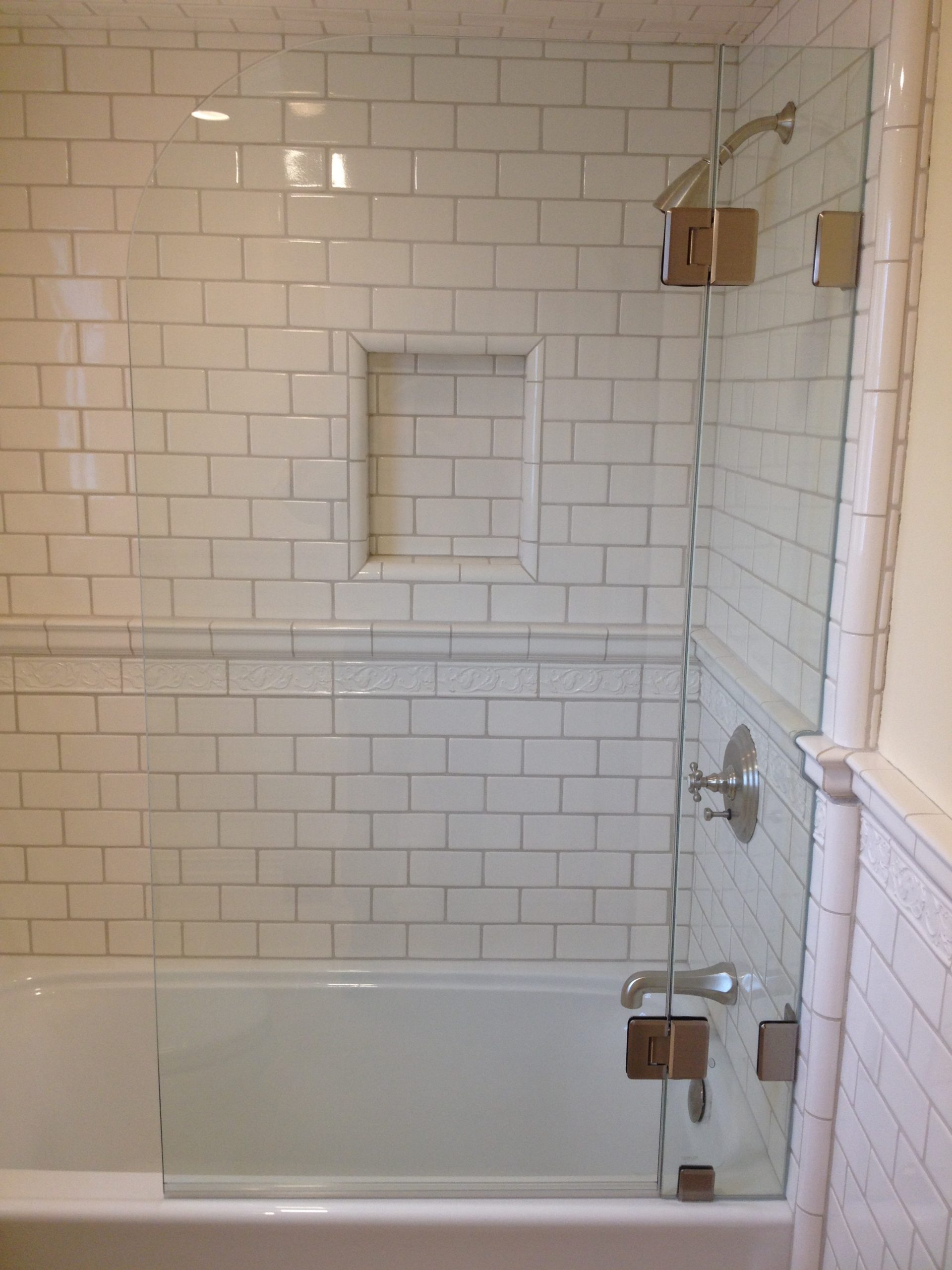
White surroundings. White tile, white marble and bright white walls make any tint obvious by comparison.
What Low-Iron Glass Changes
Low-iron glass is made with raw materials that contain much less iron. The result is noticeably clearer: edges look close to colorless, and white tile seen through the glass looks the same white as the tile beside it. The glass is just as strong; every panel we install, standard or low-iron, is tempered safety glass. See our tempered glass guide.
Compare the Options Side by Side
Tap each glass type to compare how it feels, how clear it is and how much privacy it gives.
◆ Glass Comparison
Compare the glass options side by side
3/8" Clear
The standard for frameless. Light, strong, and shows off your tile.
Solid feel
Clarity
Privacy
1/2" Clear
Heavier and more solid to the hand. The premium feel, especially on big doors.
Solid feel
Clarity
Privacy
Low-Iron
Ultra-clear, without the faint green edge of standard glass. Best against white tile and marble.
Solid feel
Clarity
Privacy
Frosted
Sandblasted for privacy while still letting light through. Good for shared bathrooms.
Solid feel
Clarity
Privacy
Light Tint
A soft smoke tone that warms a bright bathroom and softens water spots.
Solid feel
Clarity
Privacy
Relative comparisons, not lab figures. See all options on Hardware & Glass.
When Low-Iron Is Worth It
White marble or white tile. This is where the difference is most visible and where most people choose low-iron.
1/2 inch glass. Thicker glass shows more tint, so low-iron makes a bigger difference.
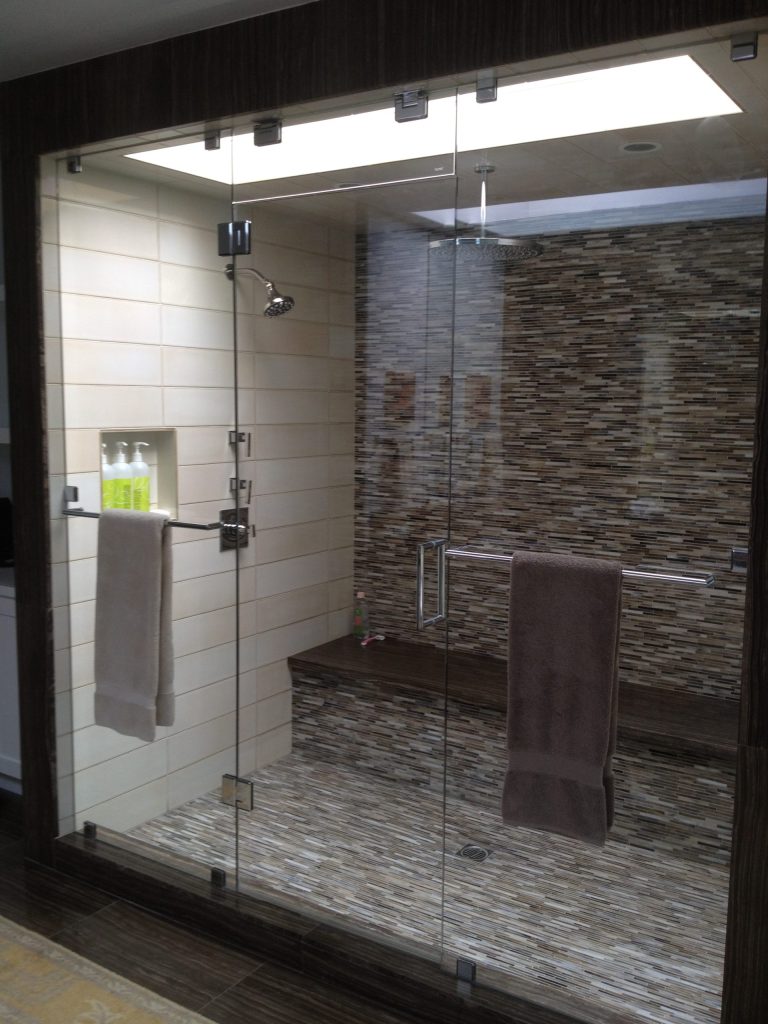
Large panels and steam enclosures. More glass means more tint. See our steam guide.
Bright, light-filled bathrooms where the glass is a design focus.
Satin brass or polished nickel hardware, where warm metal against perfectly clear glass is the look.
When Standard Clear Is Fine
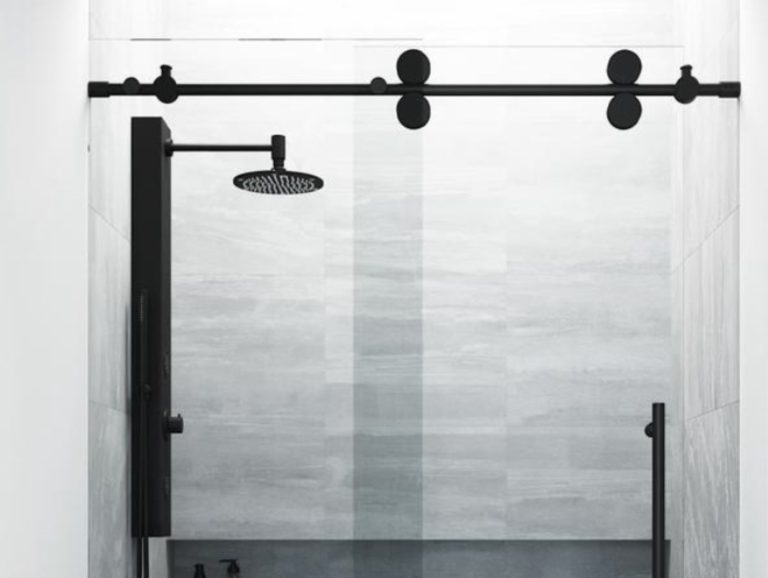
Darker tile: grey, charcoal, navy, black, or deep stone.
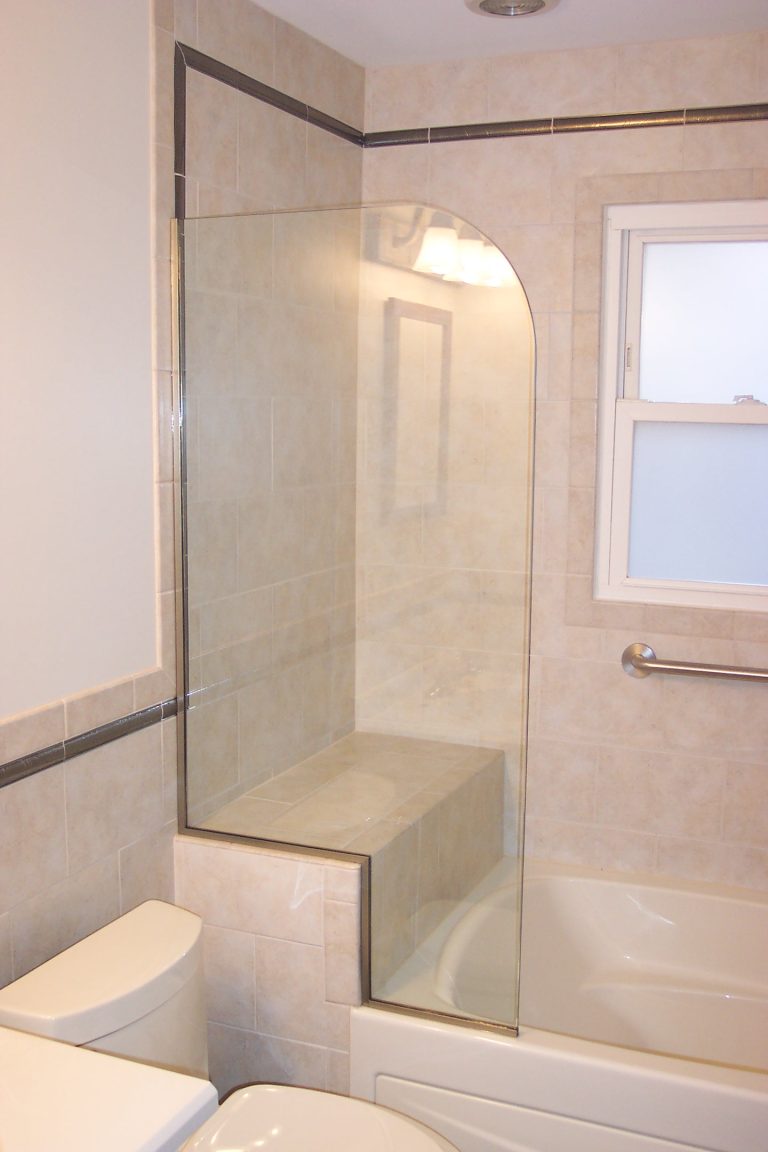
Warm-toned tile: travertine, beige, tan and earth tones, where a hint of green is lost in the color.
Busy patterns, where the eye does not settle on a flat white surface.
Budget-led projects, where the money is better spent on the right style or thickness. Our cost guide covers where to spend.
Seeing the Difference for Yourself
The difference is easy to describe and much easier to see. When we measure in your home we bring glass samples, and the best test is to hold a standard clear sample and a low-iron sample against your own tile, in your own light. If you cannot tell them apart in your bathroom, you do not need to pay for low-iron.
Other Glass Options
Frosted glass for privacy while still passing light. See our privacy glass guide.
Light tint for a soft smoky tone that also softens water spots.
Low-iron glass shows everything, including water spots. A squeegee after each shower and a weekly clean keep it looking new, and a protective coating makes it easier still. In Southern California, hard water is the biggest threat to clear glass. Our hard water guide and care guide explain how to protect it.
Clear vs. Low-Iron at a Glance
Standard clear
Low-iron
Edge color
Green
Nearly colorless
White tile through the glass
Slightly cooler, greener
True white
Strength when tempered
Same
Same
Cost
Lower
Higher
Best behind it
Dark, warm or patterned tile
White and pale tile, marble
Where You Will Notice It Most
At the hinge and handle edges of a hinged door, which you see every time you open it.
Where two panels meet, on corner units and neoangles, because you look through two thicknesses at once.
In photos. If you plan to sell your home, listing photos often exaggerate the green edge of standard glass against white tile.
In daylight. Natural light shows tint more honestly than warm bathroom bulbs.
Common Mistakes
Paying for low-iron against dark tile. The difference will be almost invisible.
Mixing low-iron and clear panels in one enclosure.
Choosing standard clear with white marble and 1/2 inch glass, then noticing the green edge every day.
Deciding from a sample held in the hand. Hold it against your tile and look through it at an angle.
How Low-Iron Fits Your Overall Budget
Low-iron adds to the price of the glass, but it is rarely the biggest factor in the total. The style and size of the enclosure matter more. If you have white tile and you are choosing between low-iron and a thicker glass, low-iron usually makes the more visible difference. Our price explorer shows how each choice moves the price.
Low-Iron and Thickness Together
Glass thickness and glass type work together. The green tint is proportional to how much glass you look through, so:
3/8 inch clear shows a modest green edge, often unnoticed against warm tile.
1/2 inch clear shows a deeper green edge, more noticeable against white.
3/8 or 1/2 inch low-iron stays close to colorless either way.
If you are choosing 1/2 inch glass for its solid feel and your tile is pale, low-iron is often worth pairing with it. Our thickness guide explains when 1/2 inch makes sense.
A Quick Self-Test
Not sure whether you would notice? Try this before you call: look at the edge of any glass table top or shelf you have at home, then hold a sheet of white paper behind it. That green you see at the edge is what standard clear glass looks like. If it bothers you, low-iron is for you. If you had never noticed it, standard clear will probably be fine.
Frequently Asked Questions
Is low-iron glass stronger?
No. Strength comes from tempering, not iron content. Standard and low-iron glass are equally strong when tempered.
Does low-iron glass look different from the front?
Slightly clearer and brighter, especially against white. The biggest difference is at the edges.
Can I mix low-iron and clear in one enclosure?
It is better not to: side by side, the difference between panels is more noticeable than either one alone.
Is low-iron glass harder to clean?
No, but because it is so clear, spots are a little easier to see.
Is low-iron glass the same as “ultra-clear” glass?
Yes. Low-iron, ultra-clear and optically clear all describe the same idea: glass with less iron, and so less green.
Does low-iron glass cost much more?
It costs more than standard clear. We can quote both so you can compare.
See the difference against your own tile. Get a free quote with an exact price the same day, often right over the phone. When you are ready, we measure in your home and bring samples. Or call 800-715-0031.
Tempered Safety Glass Explained: Why Every Shower Door Uses It
Is shower door glass safe? How tempered safety glass is made, why it is several times stronger than ordinary glass, how it breaks, and the care that keeps it safe for years.
Shower Door Handle Styles: How to Pick the Right Pull
Compare shower door handle styles: tubular, ladder, mitered, square, traditional and antique. How each feels, which bathrooms they suit, and how to match them to your finish.
Channel vs. Clamps: How Your Shower Glass Is Held in Place
U-channel or clamps for frameless shower glass? Compare the look, cleaning, water tightness and how each handles uneven walls, so you can choose the right fixing for your panels.