Shower Door Handle Styles: How to Pick the Right Pull
By Direct Shower Door · October 2, 2026 · 7 min read
The handle is the one part of a shower door you touch every single day. It is also one of the few pieces of hardware that is purely a design choice: every handle opens the door, but each one changes how the enclosure looks and how the door feels in your hand. A slim round bar reads very differently from a squared, architectural pull.
We offer six handle styles: tubular, ladder, mitered, square, traditional and antique, each available in all six of our finishes. This guide explains how each one looks and feels, which bathrooms it suits, and how to choose.
The short answer
Tubular and ladder pulls are clean and versatile, and suit most modern bathrooms.
Square and mitered pulls have crisp, architectural lines for contemporary designs.
Traditional and antique pulls bring curves and detail to classic and transitional bathrooms.
Match the handle’s shape to your faucet and fixtures, and its finish to the rest of the door hardware.
The Six Handle Styles
Tubular
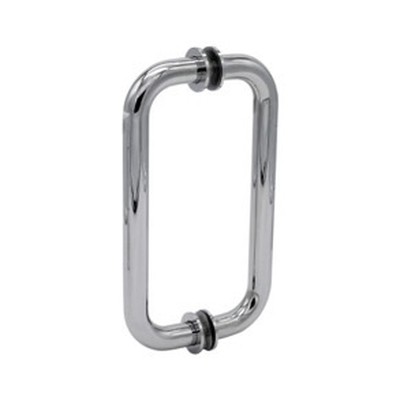
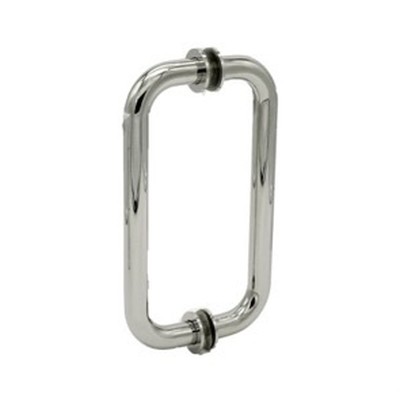
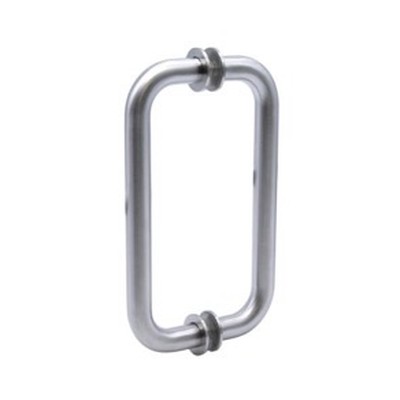
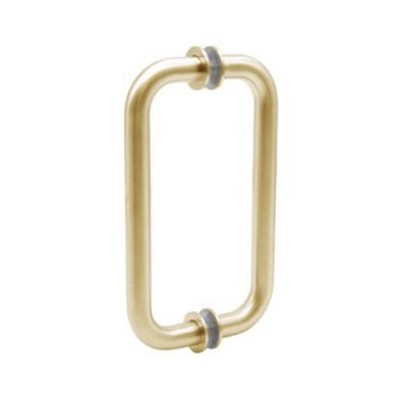
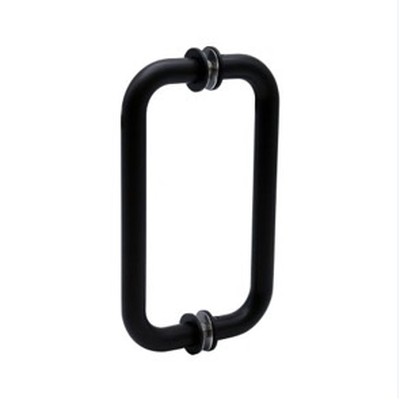
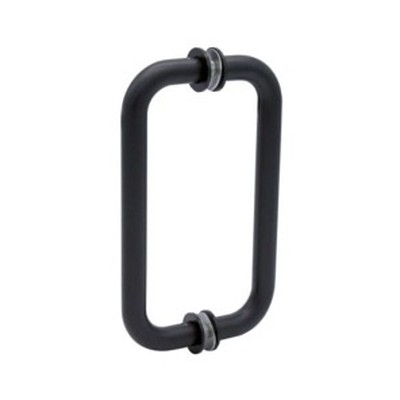
A round bar pull with a smooth, cylindrical grip. It is the most versatile shape: comfortable to hold, easy to clean, and at home in almost any bathroom. If you are unsure, a tubular pull is a safe and elegant default.
Ladder
A taller pull with two vertical bars mounted through the glass, one on each side, connected at the ends. Seen through clear glass, the bars on both sides line up into a single strong vertical. It suits larger doors and contemporary bathrooms, and gives a generous grip at any height.
Mitered
A pull with crisp, angled corners where the grip meets its mounts, like a picture frame joint. It has a precise, tailored look that suits modern bathrooms with clean-lined fixtures.
Square
A pull with a square cross-section and sharp, defined edges. It pairs naturally with square faucets and shower trims, and with large-format tile and minimalist design. In matte black it makes a strong graphic statement.
Traditional
A gently curved pull with a softer, classic profile. It suits traditional and transitional bathrooms, curved faucets and fixtures with some detail, and looks especially good in polished nickel or oil rubbed bronze.
Antique
A slender pull with a vintage character. It suits period homes, classic bathrooms and anyone who wants the shower door to feel less like modern hardware and more like a piece of furniture.
You can see each style, photographed in the hand, on our Hardware & Glass page.
How to Choose
1. Start with your fixtures
Look at your shower valve trim and faucet. Round, smooth shapes pair with tubular and traditional pulls. Squared shapes pair with square and mitered pulls. Fixtures with ornate detail pair with traditional and antique pulls.
2. Think about the size of the door
A tall or wide door can carry a longer pull like a ladder handle. A small door looks best with a more compact pull.
3. Consider who uses the shower
A longer pull or a ladder handle gives a comfortable grip at different heights, which helps in family bathrooms and for anyone who wants an easy, secure grip.
4. Choose the finish
The handle matches the rest of the door hardware. Find the finish that suits your fixtures with the matcher below.
◆ Finish Matcher
Find the finish that suits your bathroom
What finish are your faucet and shower fixtures?
Match like for like: polished chrome is an exact match, polished nickel the warmer cousin.
Polished ChromePolished Nickel
Brushed nickel matches brushed fixtures and hides water spots well.
Brushed NickelPolished Nickel
Satin brass carries a warm gold tone with a soft sheen.
Satin Brass
Matte black for a bold, contemporary line around the glass.
Matte Black
Oil rubbed bronze suits traditional and warm-toned bathrooms.
Oil Rubbed Bronze
These three sit comfortably beside almost anything. We bring samples to your measure.
Sliders often use a back-to-back pull, so you can open the door from inside and out. See frameless sliders explained.
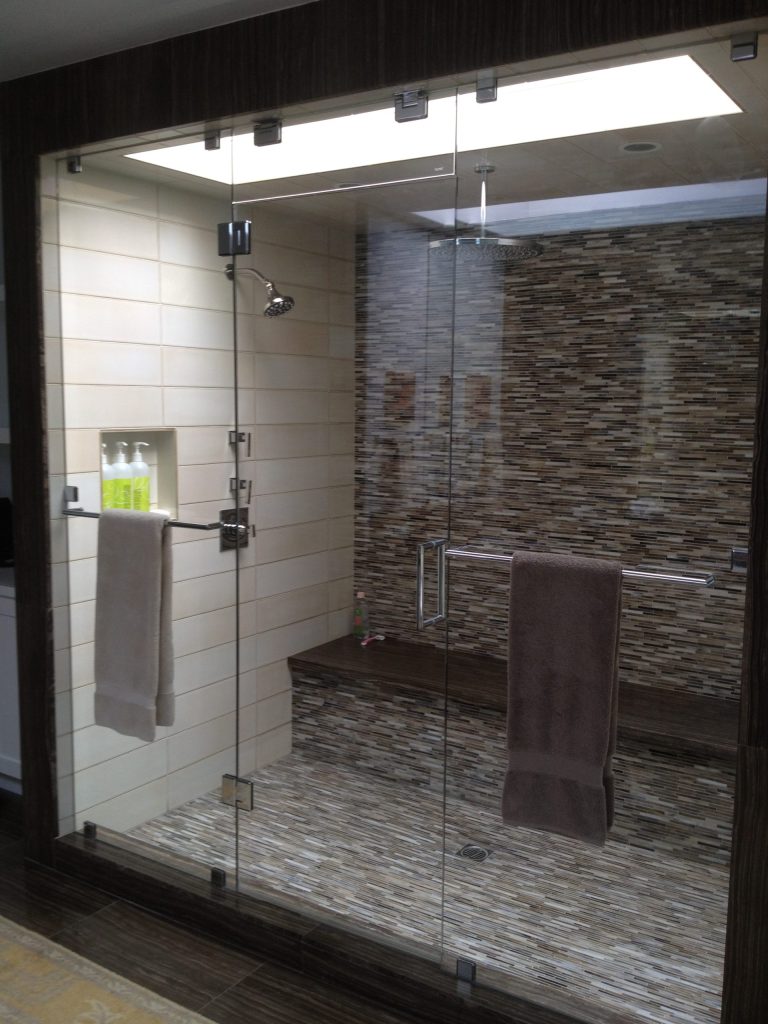
Steam enclosures use the same pulls; a longer pull helps on a tall door. See our steam guide.
Handles and Hinges Together
Your handle sits alongside the hinges and clamps, so it is worth thinking about them as a set. Our square hinges and clamps have crisp edges that pair naturally with square and mitered pulls; beveled hinges and clamps have softened edges that sit well with tubular and traditional pulls. Our channel versus clamps guide explains how fixed panels are held.
Care
The handle is the most touched part of the enclosure, so it collects fingerprints and soap. Wipe it with a soft cloth and mild soapy water each week, then dry it. Avoid abrasive pads and harsh chemicals, which can damage finishes. If a handle ever feels loose, call us: it is a quick adjustment. Our care guide has the full routine.
Handle Styles at a Glance
Handle
Shape
Suits
Pairs with
Tubular
Round bar
Almost any bathroom
Round fixtures, beveled hinges
Ladder
Tall, two vertical bars
Large doors, contemporary
Any finish; strong on clear glass
Mitered
Angled corners
Modern, tailored
Square fixtures, square hinges
Square
Square section, sharp edges
Minimalist, large-format tile
Square fixtures, square hinges
Traditional
Gentle curves
Classic, transitional
Curved fixtures, beveled hinges
Antique
Slender, vintage
Period homes, classic baths
Polished nickel, oil rubbed bronze
Comfort and Daily Use
A handle should feel good every time you reach for it, often with wet hands. A few practical points:
Grip size. Round tubular pulls are comfortable in most hands. Square pulls feel crisp and precise.
Height. We position the handle at a comfortable height for the household. Longer pulls work for a wider range of heights.
Inside and out. On sliders, and on many hinged doors, a back-to-back pull gives a handle on both sides of the glass.
Clearance. The handle should clear the wall and any towel bar when the door opens fully.
Common Handle Mistakes
Choosing a handle that fights the fixtures. A square pull beside ornate curved taps can look disjointed.
Using the handle as a towel bar. It is not designed for the extra weight and leverage over time.
Forgetting the matching finish. The handle should match the hinges and clamps on the same door.
See the Real Thing
Handles are tactile. Our Hardware & Glass page shows each one photographed, and we bring hardware samples to every free quote so you can feel the difference in your hand before you choose.
Placement and Door Direction
Where the handle goes is decided along with which way the door opens:
The handle sits on the opposite edge from the hinges, at a comfortable height for the household.
It must clear the wall, any towel bar and the vanity when the door is fully open.
On a door and inline panel, it sits on the door’s free edge, away from the panel.
On a slider, it is placed so you can reach it from inside without stretching into the spray.
Handle Terms You May Hear
Back-to-back pull: matching pulls on both sides of the glass, mounted through the same holes.
Single-sided pull: a pull on the outside only, sometimes with a small knob or grip inside.
Center-to-center: the distance between the two mounting points, which fixes where the holes go in the glass.
Standoff: the short post that holds the grip away from the glass.
Because tempered glass cannot be drilled after tempering, the handle’s center-to-center size is decided before the glass is made. See our tempered glass guide.
Frequently Asked Questions
Can I change the handle on my existing shower door?
Often, yes, if the new handle’s mounting holes match the existing holes in the glass. Tempered glass cannot be drilled after tempering, so the holes have to line up. See our tempered glass guide.
Which handle is easiest to grip?
A tubular pull is comfortable for most hands; a ladder pull gives a long grip at any height.
Can the handle be a different finish from the hinges?
We recommend one finish across the enclosure for a cohesive look.
Can I see the handles before choosing?
Yes. We bring hardware samples when we measure in your home.
Can I get a towel bar handle?
Ask us about towel bar options designed to be fixed through the glass.
Which handle is best for a slider?
Any of our styles can work. A back-to-back pull is usual, so the door opens from inside and out.
Want to feel the handles for yourself? Get a free quote with an exact price the same day, often right over the phone. When you are ready, we measure in your home and bring samples. Or call 800-715-0031.
Tempered Safety Glass Explained: Why Every Shower Door Uses It
Is shower door glass safe? How tempered safety glass is made, why it is several times stronger than ordinary glass, how it breaks, and the care that keeps it safe for years.
Channel vs. Clamps: How Your Shower Glass Is Held in Place
U-channel or clamps for frameless shower glass? Compare the look, cleaning, water tightness and how each handles uneven walls, so you can choose the right fixing for your panels.
Frosted and Privacy Shower Glass: Options, Pros and Cons
Considering frosted shower glass? Compare frosted, light tint and clear glass for privacy, light, cleaning and style, and learn when partial frosting is the best of both.