Neoangle Shower Doors: The Complete Guide to Corner Showers
By Direct Shower Door · October 2, 2026 · 8 min read
A corner shower is one of the most efficient layouts in any bathroom. It uses two existing walls, leaves the middle of the room open, and fits where a full alcove never could. The question is what to put across the front of it. You have two main choices in frameless glass: a square, 90 degree corner enclosure, or a five-sided neoangle.
This guide explains how a neoangle works, why it feels larger than its footprint, where it suits best, and how it compares with a 90 degree corner. There is a style finder halfway down if you want to test your layout.
The short answer
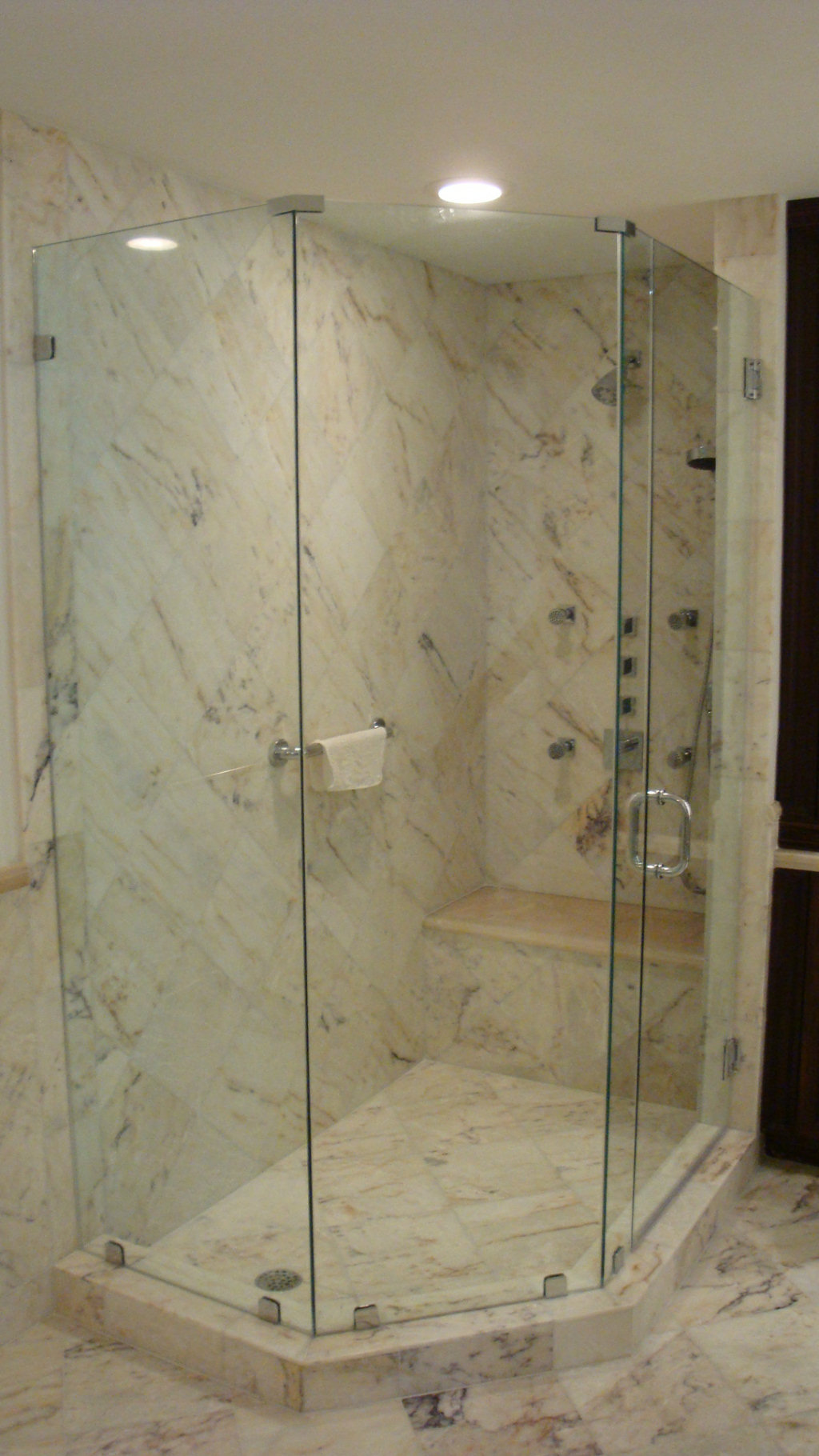
A neoangle is a corner enclosure with an angled front. Seen from above, the shower is five-sided: two walls, two short glass returns, and a glass front with the door.
Cutting the corner off frees floor space in front of the shower, which is why neoangles suit smaller bathrooms.
Neoangles need a shower base or tiled floor built to the same angled shape.
What Makes an Enclosure “Neoangle”
Picture a square corner shower, then slice the outside corner off at 45 degrees. The result, seen from above, has five sides: the two tiled walls, two short glass side panels running out from the walls, and an angled front panel connecting them. The door usually sits in that angled front, facing diagonally into the room.
The panels meet at 135 degree angles rather than 90, which is where the name comes from. Each one is custom cut, and in a frameless neoangle the panels are joined with glass-to-glass clamps or hinges rather than a frame, so the enclosure reads as a single faceted piece of glass.
Why a Neoangle Saves Space
The cut-off corner is the point. In a small bathroom, the floor right in front of a square corner shower is often the tightest spot in the room: it is where you step out, dry off, and pass between the vanity and the toilet. By angling the front, a neoangle gives that floor back while keeping most of the useful space inside the shower, because the part it removes, the far outside corner, is the part you rarely stand in.
The angled door has another advantage. It swings out diagonally, into the open middle of the room, rather than straight across a narrow path. In many compact bathrooms that is the difference between a hinged door that works and one that does not. Our small bathroom guide covers door swing in more detail, with a quick clearance check.
Neoangle vs. 90 Degree Corner
Choose a neoangle if
The bathroom is small or the corner sits close to a door, vanity or toilet.
You want the entry to face into the room rather than along a wall.
You like the faceted, jewel-box look of angled glass.
The existing shower base is already a neoangle shape (common in homes built in the 1980s through 2000s).
Choose a 90 degree corner if
You have the floor space and want the largest possible shower.
You want a bench along one wall or a long, rectangular showering area.
The design is strongly linear and you want square lines to match the tile.
Answer four quick questions about your bathroom and the finder suggests the style we would most likely recommend at a measure.
◆ Style Finder
Which shower door fits your bathroom?
Planning a Neoangle: What to Know
The base must match the glass
A neoangle sits on a curb or base with the same angled outline. If you are replacing an existing neoangle enclosure, the base is already there and we measure to it. If you are remodelling, the tile setter or contractor builds the curb to the shape you choose, and we measure once the tile is finished. Our guide on when to order glass during a remodel explains the timing.
Door size and direction
The door is usually centred in the front panel and can be hinged to swing left or right. We plan it so it clears the vanity, the toilet and the bathroom door, and so it opens toward the side you naturally approach from.
Glass and thickness
Most neoangles use 3/8 inch tempered glass, which is rigid enough for the panel sizes involved. 1/2 inch is available for a heavier feel. Clear and low-iron glass keep the faceted look crisp; frosted glass on the side returns can add privacy while keeping the front clear. Our glass thickness and tint guide covers each option.
Hardware and finish
Because a neoangle has more joints than a single door, there is more hardware on show, so the finish matters more. Polished chrome and brushed nickel blend in; matte black and satin brass turn the joins into a design feature. All six of our finishes are available: polished chrome, polished nickel, satin brass, oil rubbed bronze, matte black and brushed nickel. Our hardware finish guide has a finish matcher.
Ceiling height and steam
Most neoangles stop below the ceiling. If you want a steam shower in a corner, the glass needs to run to the ceiling and seal fully. See our steam enclosure guide.
Cleaning a Neoangle
More panels means more glass, but a frameless neoangle is still easy to keep clean because there is no frame for water to sit in. A squeegee after each shower, working each panel top to bottom, keeps it clear. Pay a little extra attention to the joints between panels and to the curb, where water can gather. Our care guide has a printable routine.
See Real Neoangles
Corner showers vary a lot with tile, finish and size. Browse neoangle installs in our project gallery to see how the angled front works in real Southern California bathrooms, from compact hall baths to larger primary suites.
Neoangle vs. 90 Degree Corner at a Glance
Neoangle
90 degree corner
Footprint
Five-sided, corner cut off
Square or rectangular
Floor space outside
More
Less
Space inside
Slightly less
More
Door direction
Diagonal, into the room
Straight out from the front or side
Glass panels
Three (two returns and a front with the door)
Two or more
Best for
Smaller bathrooms, angled bases
Larger bathrooms, benches, linear designs
Common Neoangle Mistakes
Choosing a door that is too narrow. The angled front limits the door width. Make sure the opening is comfortable for everyone who uses it.
Pointing the shower head at the door. In a corner shower the head is often on a side wall. Aim it across the shower, not at the opening.
Building an angled base without a glass plan. If you are remodelling, decide the glass before the curb is built so the angles and widths suit the door you want.
Forgetting the vanity. Check the door clears vanity drawers and doors when open.
Updating a Dated Neoangle
Many Southern California homes built from the 1980s to the 2000s have a framed neoangle with gold or bright brass frames, often with patterned glass. Replacing just the enclosure, while keeping the existing base and tile, is one of the quickest ways to update a bathroom. Frameless panels in clear glass with brushed nickel or matte black hardware make the same corner look entirely new. If the tile is also being replaced, plan the glass with the tile; see when to order glass during a remodel.
Neoangle With a Bench or Knee Wall
Corner showers sometimes include a built-in bench or a low knee wall on one side. Frameless glass can be notched to fit around a knee wall, with a clamp at the top of the wall. The door and notch panel style is designed around exactly this. Tell us about any bench or wall when you book.
Frequently Asked Questions
What does neoangle mean?
It describes a corner shower whose panels meet at 135 degree angles instead of 90, giving a five-sided footprint with an angled front.
Is a neoangle smaller inside than a square corner shower?
Slightly, because the outside corner is removed. In practice the lost area is the part you rarely use, and the room outside the shower gains noticeably.
Can you replace an old framed neoangle with frameless glass?
Usually, yes. We measure your existing base and walls and cut new frameless panels to fit.
Can the door swing in both directions?
Some hinge systems allow it. We will tell you what suits your layout at the measure.
Is a neoangle a good choice for a primary bathroom?
It can be, especially where the shower sits in a corner near the bathroom door or vanity. In a large room, a 90 degree corner gives more space inside.
Can a neoangle have a frosted panel?
Yes. A frosted side return can give privacy from one direction while the front stays clear.
Thinking about a corner shower? Get a free quote with an exact price the same day, often right over the phone. When you are ready, we measure in your home and bring samples. Or call 800-715-0031.
Frameless Sliders Explained: The Modern Sliding Shower Door
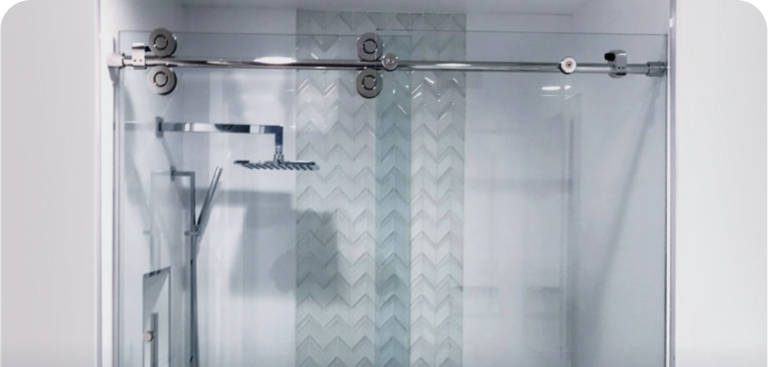
How do frameless sliding shower doors work? Learn about top rails and rollers, single vs. double sliders, 90 degree corner sliders, finishes, and when a slider beats a hinged door.
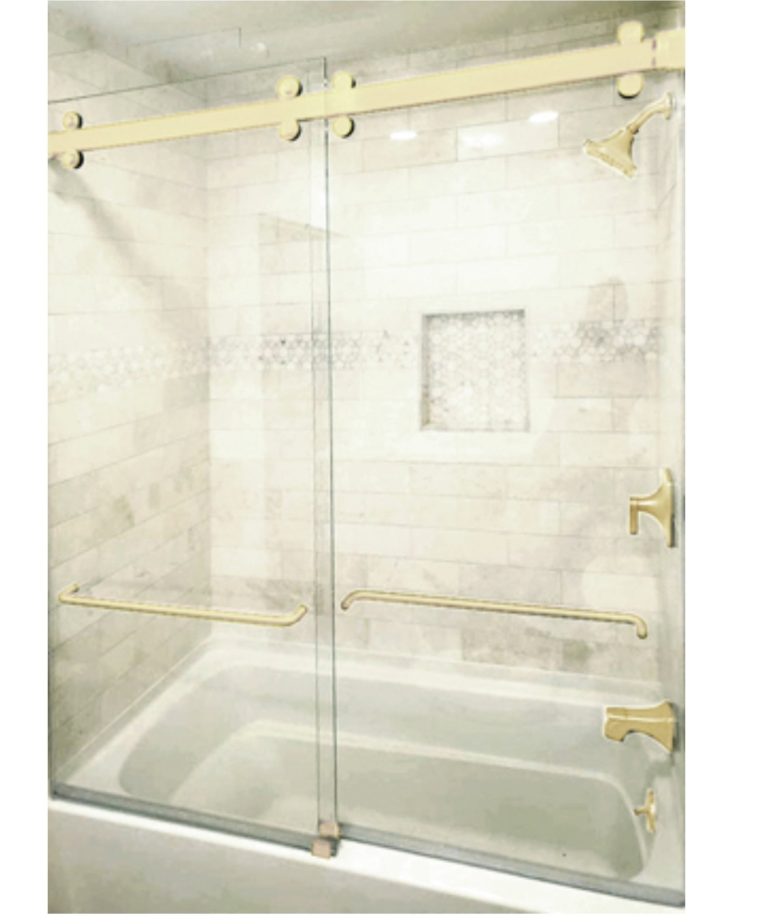
Shower over a tub? Learn how bypass sliding doors work, how they compare with a tub splash panel or hinged door, and how to choose glass, hardware and finish for your bathroom.
Door and Inline Panel vs. Single Door: Which Fits Your Opening?
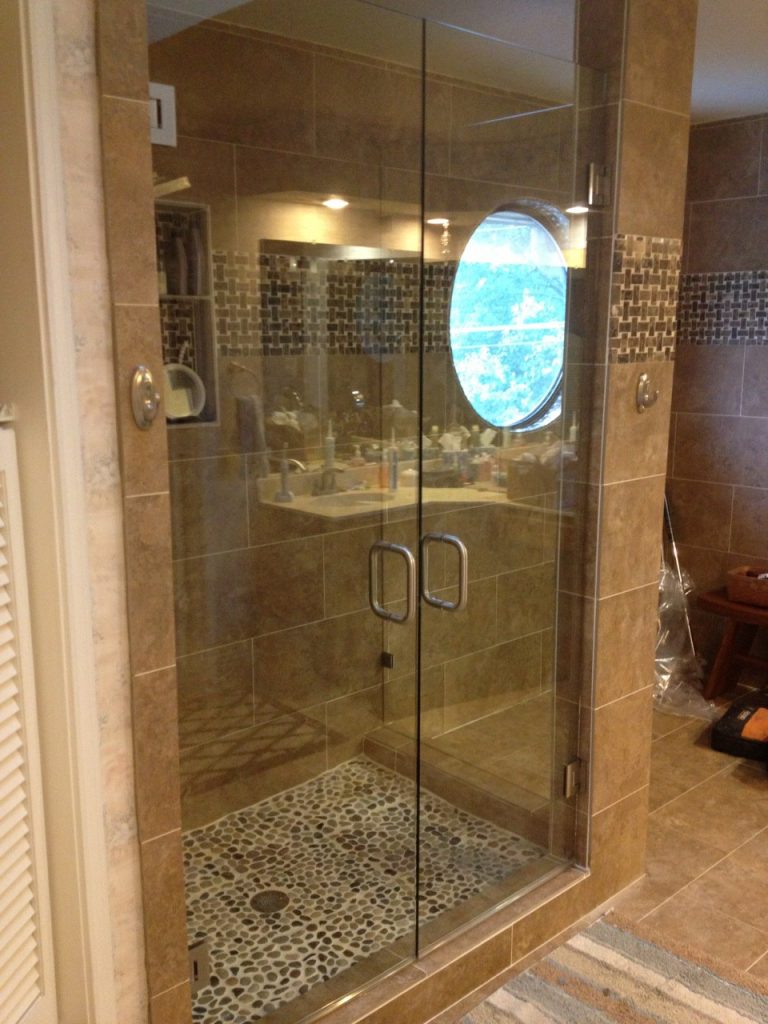
Single frameless shower door or a door with an inline panel? Compare opening widths, door swing, water control and looks, and use our measuring helper to check your shower.