Frameless vs. Semi-Frameless Shower Doors: The Real Differences
By Direct Shower Door · October 2, 2026 · 8 min read
If you have been looking at shower doors for more than a few minutes, you have probably seen three words: framed, frameless and semi-frameless. Framed is easy to picture, thin glass in a metal surround. Frameless is easy too, thick glass with almost nothing around it. Semi-frameless is the one people find confusing, because it sits in between and the term gets used loosely.
This guide explains what each term actually means, how semi-frameless differs from fully frameless in look, feel, cleaning and cost, and how to decide which suits your bathroom.
The short answer
Frameless: thick tempered glass held by minimal hardware, with no metal around the panels. The cleanest look and the easiest to clean.
Semi-frameless: glass that is framed on some edges but not others, typically with a frameless door. A lighter look than framed, at a lower cost than fully frameless.
If the clean, open look is why you are replacing your enclosure, go frameless. If budget leads, semi-frameless is a sound middle ground.
Three Kinds of Enclosure
Framed
A metal frame runs around every edge of every panel. The frame provides the strength, so the glass can be thin. Framed enclosures are the least expensive, and also the most dated-looking and the hardest to clean, because the frame creates corners and channels where water and soap collect.
Semi-frameless
Some edges are framed and some are not. A common arrangement is a frameless or minimally framed door beside fixed panels that sit in a metal channel or have framing on the outer edges. The glass is usually thinner than fully frameless. You get a lighter look than framed, at a lower cost than fully frameless.
Frameless
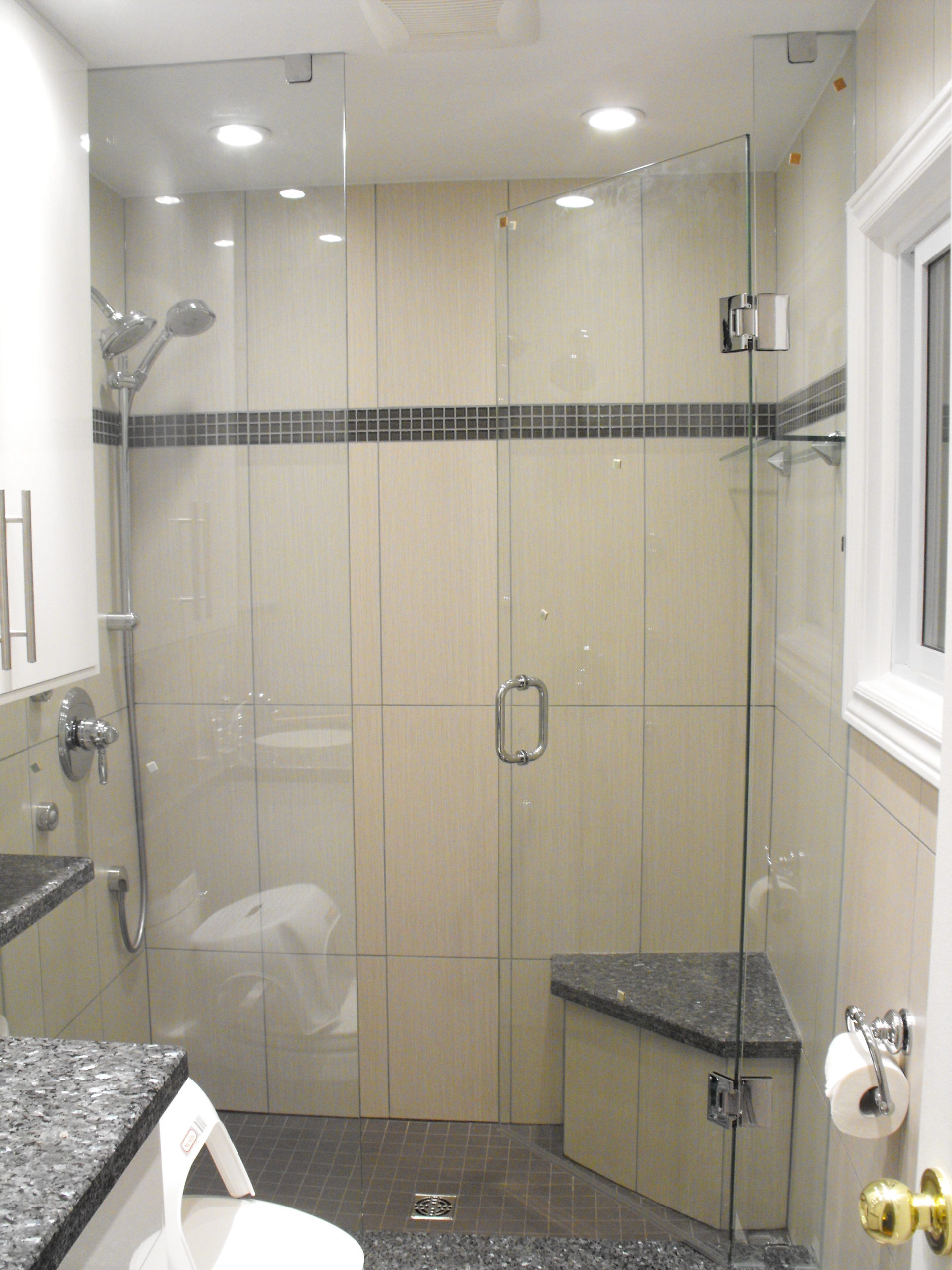
No frame around the panels. The glass, usually 3/8 or 1/2 inch tempered safety glass, is strong enough to be its own structure and is held by hinges, clamps or a top track. This is what most people picture when they think of a modern glass shower. You can browse every frameless style on our frameless shower doors page.
How They Differ in Practice
The look
Fully frameless glass almost disappears. Nothing frames the view, so the tile, the stone and the shower fixtures become the focus, and the bathroom reads as larger and more open. Semi-frameless introduces visible metal on some edges, which some homeowners prefer for its defined, finished lines, and others feel interrupts the view.
Glass thickness
Because a frame shares the structural work, semi-frameless panels can use thinner glass. Fully frameless glass has to carry everything itself, which is why it is thicker and why it feels so solid. See our guide to glass thickness for what that changes day to day.
Cleaning
Every frame edge is a place for water to sit and soap to collect. Fully frameless has the fewest of those places, so it is the easiest to keep clean. Semi-frameless sits in between: easier than framed, more to wipe than frameless. If cleaning is a priority, frameless with clamps rather than channel is the easiest of all. Our channel versus clamps guide explains why.
Water control
Both contain water well when properly installed. Frames help seal the edges they cover; frameless doors rely on precise fit, clear seals and a door sweep. In practice, the position of your shower head and the layout matter more than the enclosure type.
Cost
Semi-frameless usually costs less than fully frameless, mainly because the glass is thinner. The gap narrows on smaller enclosures and widens on larger ones. Our guide to what moves the price has an interactive explorer.
The enclosure type matters, but the layout of your bathroom matters more. Answer four questions and the style finder suggests what we would most likely recommend at a measure.
◆ Style Finder
Which shower door fits your bathroom?
How to Decide
Start with why you are replacing. If the goal is an open, modern bathroom that feels larger, fully frameless delivers it.
Consider cleaning honestly. If you want the least maintenance, fewer frame edges means fewer places for buildup.
Think about the room’s style. In a traditional bathroom, a little metal on the edges can suit the design, especially in oil rubbed bronze or polished nickel.
Weigh the budget. Semi-frameless gets you most of the way there for less.
See both in real bathrooms. Our project gallery lets you filter by style.
Framed, Semi-Frameless and Frameless Compared
Framed
Semi-frameless
Frameless
Metal around the glass
Every edge
Some edges
None, just hinges and clamps
Typical glass
Thin
Thinner than frameless
3/8″ or 1/2″ tempered
Look
Traditional, busier
Lighter, defined lines
Open, nearly invisible
Cleaning
Most effort
Moderate
Easiest
Cost
Lowest
Middle
Highest
Custom fit
Often standard sizes
Often custom
Always custom cut
The Feel in Daily Use
The difference people notice first is not visual. It is the way the door moves. Thick frameless glass swings with a satisfying weight and settles firmly against its seals. A thinner semi-frameless door feels lighter in the hand. Neither is wrong, but if you have ever used a heavy frameless door in a hotel or a friend’s home and loved it, that feeling comes from the glass thickness. See our glass thickness guide.
Upgrading From an Old Framed Door
Most of the enclosures we replace are framed doors from the 1980s, 1990s and early 2000s. Common reasons homeowners give us for replacing them:
Corroded or pitted frames that no longer clean up.
A bottom track full of grime that is impossible to reach.
Sliding doors that stick or jump off their track.
A dated look in an otherwise refreshed bathroom.
Removing the frame usually reveals the opening is not quite square, which is normal. Frameless and semi-frameless glass is cut to the actual opening, and we measure it precisely. See how to measure a shower opening.
Common Mistakes
Assuming “frameless” means the same thing everywhere. Ask what thickness of glass is being quoted. Our cost guide lists the questions to ask.
Choosing on price alone. The look and the cleaning are what you live with every day.
Ignoring the room. In a small bathroom, the right style (a slider, a neoangle) matters more than framed versus frameless. See our small bathroom guide.
Glossary: Terms You Will Hear
Return panel: a fixed glass panel that runs back from the front of the shower to the wall, as on a corner enclosure.
Inline panel: a fixed panel in the same line as the door.
Header: a horizontal bar across the top of an enclosure. Frameless enclosures usually do without one; steam enclosures may use one with a transom.
Transom: a glass panel above the door, fixed or tilting.
U-channel: a slim metal profile the edge of a fixed panel sits in. See channel versus clamps.
Clamp: a small bracket that holds glass to a wall, curb or another panel.
Glass-to-glass hinge: a hinge joining a door directly to a fixed panel.
Sweep: the clear vinyl strip along the bottom of a door that keeps water in.
Curb: the raised edge at the entrance to a shower.
Low-iron glass: ultra-clear glass without the green tint of standard glass. See clear versus low-iron.
Tempered glass: heat-treated safety glass, about four times stronger than ordinary glass. See our tempered glass guide.
Questions to Help You Decide
Will you squeegee after each shower, or do you want an enclosure that forgives skipped days?
Is the bathroom a long-term design, or a refresh before selling?
Does the room lean modern or traditional?
How much clear floor is there in front of the shower?
Is the tile a feature you want to show off?
If your answers lean toward low maintenance, a modern look and showing off the tile, fully frameless is likely to suit you. If they lean toward budget and a quick refresh, semi-frameless is a sensible choice.
Frequently Asked Questions
Is semi-frameless glass safe?
Yes. Every panel we install is tempered safety glass, whatever the style.
Is frameless glass harder to install?
It requires precise measuring and experienced installers, because there is no frame to hide small gaps. That is why our own crew handles every phase in-house.
Can I mix frameless and semi-frameless elements?
Often, yes. A frameless door beside a fixed panel is itself a semi-frameless arrangement. We design around the opening at your measure.
Which lasts longer?
Both last for many years with basic care. Frameless has no frame to corrode or trap water, which helps it age well. See our care guide.
Does frameless glass leak more than framed?
No. Properly installed frameless doors use clear seals and a sweep to keep water in. Layout and shower head position matter more than the frame.
Is semi-frameless a good choice for a rental or a quick sale?
It can be: it updates the look at a lower cost than fully frameless. For a quick turnaround, ask about our 3-Day Rush Service.
Want to compare both in your own bathroom? Get a free quote with an exact price the same day, often right over the phone. When you are ready, we measure in your home and bring samples. Or call 800-715-0031.
Frameless Sliders Explained: The Modern Sliding Shower Door
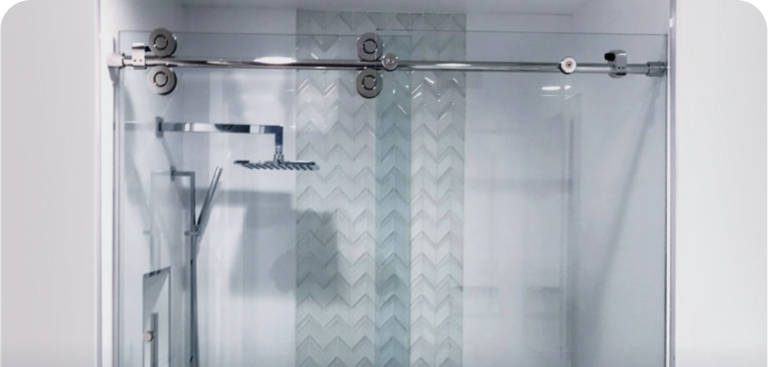
How do frameless sliding shower doors work? Learn about top rails and rollers, single vs. double sliders, 90 degree corner sliders, finishes, and when a slider beats a hinged door.
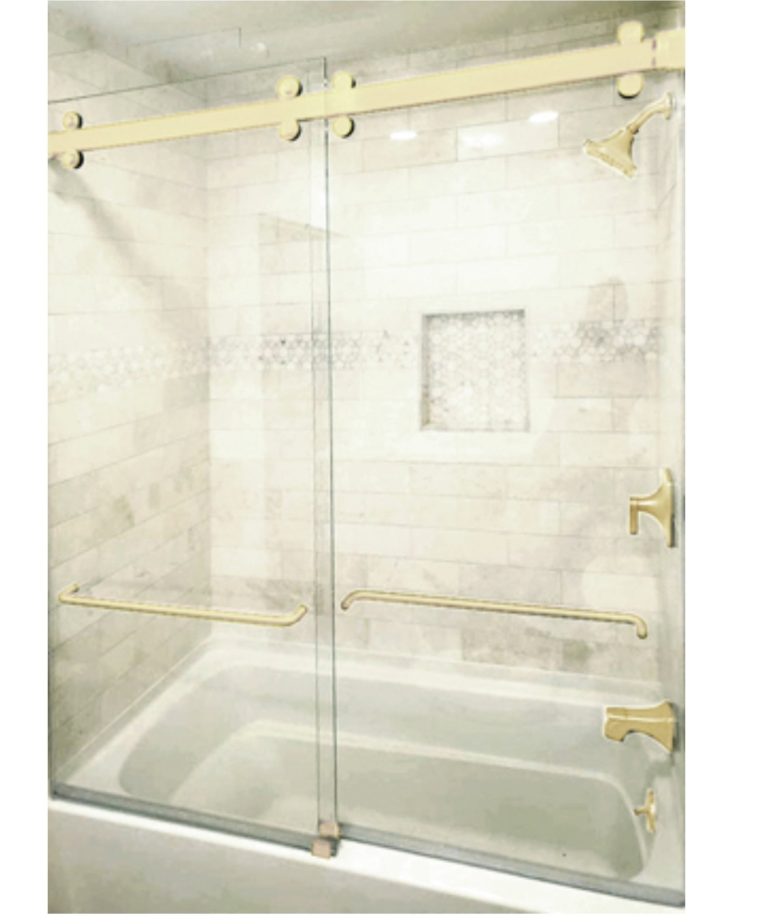
Shower over a tub? Learn how bypass sliding doors work, how they compare with a tub splash panel or hinged door, and how to choose glass, hardware and finish for your bathroom.
Door and Inline Panel vs. Single Door: Which Fits Your Opening?
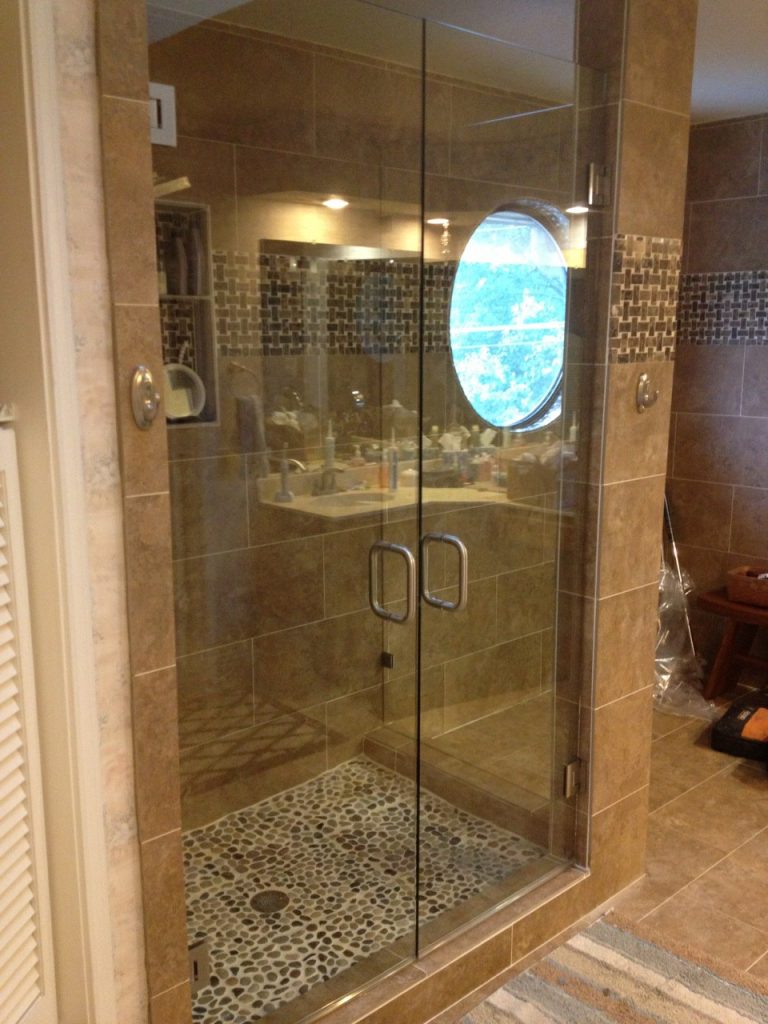
Single frameless shower door or a door with an inline panel? Compare opening widths, door swing, water control and looks, and use our measuring helper to check your shower.